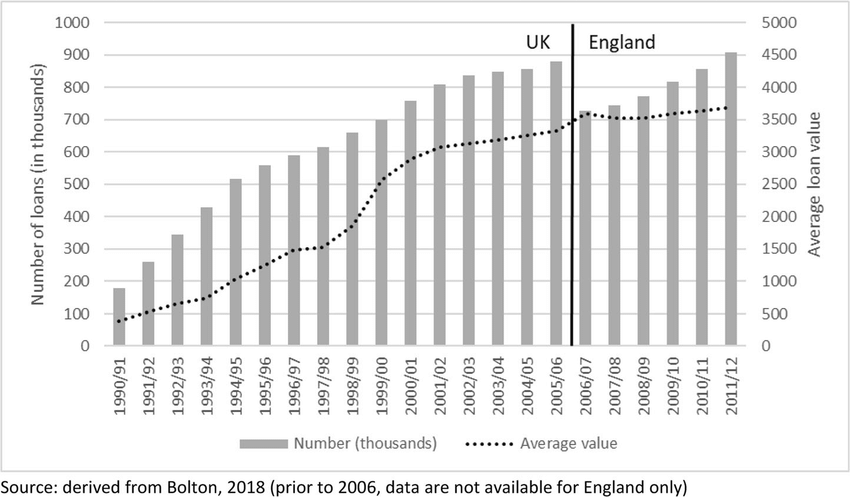
Students Face £1,500 Loss in Maintenance Loans: University Leaders Sound Alarm
The cover image of this article is from researchgate.net.
Struggling Students Will Lose Thousands of Pounds if Maintenance Loans Fail to Keep Up with Inflation
University leaders have warned that hard-up students in England are set to lose out on as much as £1,500 a year if maintenance loans fail to keep up with inflation. As the cost of living continues to soar, many students are struggling to pay their rent and bills.
The government is preparing to announce loan increases for 2023-24, amid fears that growing numbers of students will drop out due to insufficient finances. Maintenance loans are taken out to cover living costs while studying, though many students take on part-time jobs to supplement the loan.
The Russell Group of universities has stated that the Department for Education (DfE) is calculating loan increases based on outdated projections; these do not take into account sudden spikes in inflation resulting from things such as the Covid-19 pandemic and war in Ukraine. It is therefore causing a “significant real-terms cut” in loans.
For example, if the DfE uses the projected rate of inflation for early 2024 (2.8%), a student living away from home outside London will receive £9,978 – £1,523 less than they would if the loan had increased to cover inflation. This difference could mean the difference between attending university or dropping out.
To combat this, university leaders have been providing additional support to students in the form of grants, emergency loans and other financial packages. Prof Charlie Jeffery of the University of York has called on the government to step up with “Covid-style hardship payments”, along with an increase to maintenance loans.
The Russell Group has also called for the review of the parental earnings threshold (which has been frozen at £25,000 since 2008). This means that fewer students are entitled to the maximum level of support each year. It is hoped that the reintroduction of maintenance grants for those in the most need could be a solution.
Sultan Chaudhury of the University of Nottingham Students’ Union also noted that financial hardship is not only limited to students from disadvantaged backgrounds; students from middle-income households are just as likely to “become increasingly vulnerable” due to a “growing gap” between loan value and real living costs.
Dr Tim Bradshaw of the Russell Group concluded that universities are doing their best to help students with millions of pounds of investment in hardship support. However, it is “frustrating” to see students financially worse off due to inaccurate government projections, especially when the loan is eventually paid back by the student.
The DfE has responded, noting that they are increasing the amount available to students through loans and grants, as well as providing a £261m fund for students in need.
In conclusion, university leaders are keen to stress the importance of maintenance loans keeping up with inflation in order to prevent students from dropping out of higher education due to lack of finance. They feel the government need to take action in the form of increased loans, a review of the parental earnings threshold, and the reintroduction of maintenance grants in order to ensure fairness and equality for all students who hope to pursue their studies.